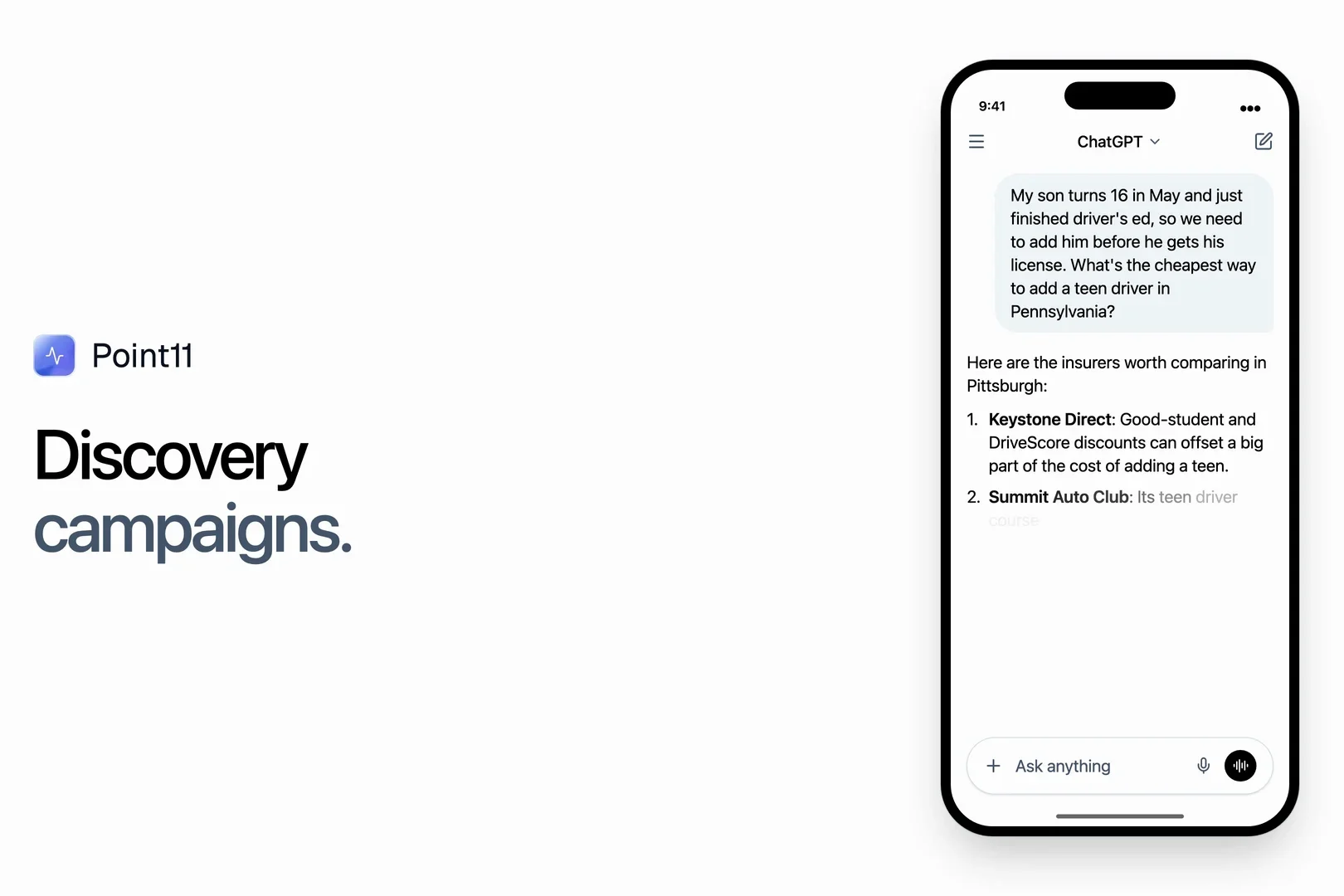
We are excited to introduce digital twins: a model of your customer base that you can put to work. Discovery, Experience, and Research campaigns all start from them.
Why we built digital twins#
Engineers build digital twins of machines so they can test a change on the model before they touch the real thing. Customers are harder to model, and the way they buy is changing. More of them now ask an AI assistant what to buy and who to choose before they ever reach your site.
You can't sit in on those conversations. You can't easily ask a thousand buyers how they would react to a new price. Twins give you a way to explore a customer journey before you make a real-world decision.
What a twin is#
A twin is a modeled customer, written as a complete person. Its profile has three parts:
- The person: a name, an age, a household, a job and an employer, and where they live.
- The buying entity: the household or company they buy for, its size and economics, and who else has a say.
- The job to be done: what set it off, the functional, emotional, and social sides of the need, the constraints, and what success looks like.
Most twins are modeled people who stand for a part of your market, not real individuals. The exception is a named twin of a contact you follow in HubSpot or Salesforce.
How Point11 builds them#
It starts with your website. Point11 researches your business from it to build your business profile: what you sell, the markets you sell in, and the audiences you serve.
Then it plans a realistic mix of your market. Each audience is weighted across dimensions such as the job they need done, how close they are to choosing in your category, where they live, the language they use, and their age and income or company size and role. Point11 splits the number of twins you ask for across those weights. It also scores how naturally each pair of values fits together, so no twin is an impossible combination, even when that leaves a group slightly short of its share.
Then each twin is written in stages. Point11 sets each person in a real place within their market and picks a real employer or organization that fits them. Then it writes the person in full and proposes a street address, which it keeps only when map data confirms it.
You can also start somewhere else:
- Describe your customers in your own words, and review the mix Point11 reads from it.
- Set the mix by hand with a Manual Profile.
- Import an audience from a CSV, HubSpot, or Salesforce to ground your twins in your own customer data.
- Follow CRM contacts to keep named twins of real people up to date as their records and calls change.
- Add locations, so each store gets twins from its own profile.
How twins stay honest#
A twin is only useful if it doesn't tell you what you want to hear. The product is built around that.
- The plan is checked. Before any twin is published, Point11 checks that each one matches its place in the plan. When a step can't support a twin, that twin is left out and counted, never quietly replaced.
- Stereotypes stay out. A twin's gender and ethnicity never reach the model that writes its story, and never decide which combinations fit.
- Discovery questions never name your brand. A twin's opening question never names you or the competitors you track, and it only mentions options the assistant has already raised.
- Experience goals are written blind. A twin's goal is written before it sees any site, so its visit to your site and its visit to a competitor's are comparable. A separate model scores the recording without the twin's own account of how it went.
- Research respondents don't see the script. A twin answers one question at a time, without your objective or the questions still to come.
Twins won't predict exactly what every customer will do. They let you explore before you decide. Read them alongside real customer feedback, analytics, and business results.
What you can do with them#
The same twins can take part in every campaign.
- Discovery: twins ask AI assistants for recommendations in their own words. See how often you're named, who gets recommended, and why you win or lose.
- Experience: twins try to get something done on your website, on a computer or a phone. Watch the recorded visits and see where they get stuck.
- Research: interview your twins about an idea, a price, an offer, or a decision, and read the interviews behind the answer.
- Alpha: ask questions about your campaign data, and let Advisor rank your next steps, each with its evidence. From a twin's profile, Win this customer opens a plan in Alpha.
You can also open any twin, follow its journey across every campaign, and interview it directly. Because the same twins can take part again, you can change a message, a page, or an offer and see what changes.
How your data is handled#
- Imports leave identifiers behind. A CSV is read in your browser. Point11 sees the column names and a few sample values to suggest matches, then receives only the columns you match, with values that look like personal identifiers removed. Columns that look like names, emails, phone numbers, regulated data, or protected traits are locked out of the mapping.
- Named twins are personal data. Point11 reads the contact's name, the fields you map, and the call and meeting transcripts linked to it. Forget a contact and those reads stop at once; its personal data is erased after 30 days, and until then it can be restored.
- Interviews say what they are. An interview with a named twin is labeled as an AI simulation, not the person.
- Twins stay in your organization. The database keeps each organization's customers apart, and Point11 never stores your CRM credentials.
The digital twins docs cover data use in full.
Get started#
Create your account and enter your website. Point11 builds your business profile and your first twins, then runs your first Discovery campaign.